February 2026 • 10 Minute Read
Why Montana Light Is Special
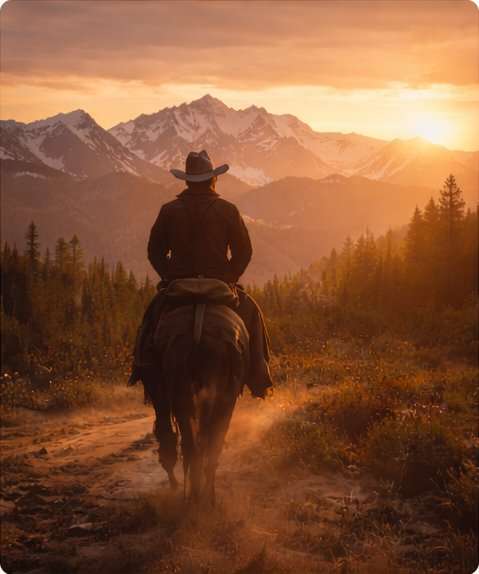
Photographers who have traveled the world consistently rank Montana among the finest destinations for natural light photography. The state's northern latitude produces exceptionally long golden hours, those magical periods around sunrise and sunset when warm, directional light transforms landscapes into works of art. In midsummer, golden hour can last well over an hour, bathing Montana's mountains, rivers, and prairies in the kind of light that makes ordinary scenes extraordinary.
But it's not just the latitude. Montana's clean, dry air creates a clarity of light that's rare in the Lower 48. Colors are more saturated, shadows are more defined, and the interplay of light and landscape has a three-dimensional quality that's almost impossible to capture elsewhere. Add in dramatic cloud formations, wildfire smoke that occasionally creates surreal orange atmospheres, and the state's extraordinary diversity of landscapes, and you have a photographer's paradise.
The 10 Best Locations for Golden Hour Photography
1. Wild Goose Island, St. Mary Lake (Glacier NP), This tiny island in the middle of St. Mary Lake, backed by towering peaks, is one of the most photographed spots in Montana. Sunrise here is extraordinary, warm light hits the mountains while the lake reflects perfect mirror images. The pullout is on Going-to-the-Sun Road. Arrive 30 minutes before sunrise for the best conditions. A long lens (200mm+) compresses the mountains behind the island beautifully.
2. Paradise Valley, Emigrant, Looking south toward the Absaroka Range, Paradise Valley offers sweeping pastoral scenes with the Yellowstone River winding through ranch land in the foreground. Sunset light hits the mountains perfectly, turning them shades of pink, orange, and gold. The valley's open character provides unobstructed horizons and dramatic sky compositions. East River Road offers several elevated pullouts with commanding views.
3. Schwabacher Landing Approach (from the Montana side), While technically in Grand Teton, the drive through Montana's Centennial Valley to reach the Tetons passes through some of the most photogenic landscapes in the region. The valley itself, with its wide-open grasslands and the Centennial Mountains, provides outstanding sunrise opportunities with warm side-light.
4. Flathead Lake, Polson, The largest natural freshwater lake west of the Mississippi. Sunset over the lake from the eastern shore near Polson creates silhouettes of the Mission Mountains with the lake's vast surface reflecting the sky. In calm conditions, the reflections are flawless. In windy conditions, waves catch the light in different ways, creating dynamic, energetic compositions. Fall brings spectacular colors from the lakeside cherry orchards and cottonwoods.
5. Beartooth Highway, Red Lodge to Cooke City, This 68-mile road climbs to nearly 11,000 feet, passing through alpine tundra, past glacial lakes, and alongside dramatic cliff faces. Sunrise from the Beartooth Plateau is otherworldly, you're above the clouds, watching light spread across a landscape that feels more like Tibet than Montana. The road is typically open from late May through mid-October.
6. Bannack Ghost Town, Dillon, Montana's first territorial capital is now a beautifully preserved ghost town. The weathered wooden buildings glow in golden hour light, and the empty streets create powerful compositions that tell stories of the Old West. Late afternoon light is best, when long shadows add depth and drama. The surrounding sagebrush landscape adds context and scale.
7. Holland Lake, Swan Valley, This lesser-known gem in the Swan Valley offers a pristine alpine lake backed by the peaks of the Bob Marshall Wilderness. Sunrise here is magical, mist rises from the water, light catches the peaks, and the reflection in the still morning water creates perfect symmetry. The campground provides easy access for early morning shoots.
8. National Bison Range, Moiese, Golden hour light on a bison herd against the backdrop of the Mission Mountains is one of Montana's signature wildlife photography opportunities. Spring calving season and fall rut provide the most dynamic subject matter. The 19-mile scenic drive can be timed to coincide with evening light for maximum impact.
9. Two Medicine Lake (Glacier NP), Less visited than other areas of Glacier, Two Medicine offers spectacular reflections and dramatic mountain scenery. Rising Wolf Mountain towers over the lake and catches the first light of dawn beautifully. The quieter atmosphere means fewer people in your frames and a more contemplative shooting experience.
10. Missouri River Breaks, Lewistown, The badlands along the Missouri River are Montana's hidden gem for landscape photography. The eroded sandstone formations, hoodoos, and vast prairie create an almost otherworldly landscape. Golden hour light transforms the pale sandstone into warm golds and deep oranges, and the solitude is complete, you might be the only person for miles in any direction.
Technical Tips for Montana Light
- Montana's dry air means less atmospheric haze, polarizing filters are extremely effective for saturating blue skies and cutting reflections on water
- Graduated neutral density filters help balance the exposure between bright skies and shadowed valleys, which is a common challenge in mountain photography
- In summer, sunrise is around 5:30 AM and sunset around 9:30 PM, plan accordingly and bring sufficient battery power and memory cards
- Wind is a constant companion in Montana, bring a sturdy tripod and use a remote shutter release for long exposures
- Smoke from western wildfires can create extraordinary light conditions in late July through September, the orange, diffused atmosphere, while concerning environmentally, produces hauntingly beautiful photography
- Always carry bear spray when shooting in the backcountry, even on short walks from the car to a composition
The golden rule of Montana photography: be present. The most memorable images come not from rushing between locations, but from settling into one spot, watching the light change, and waiting for that moment when everything aligns, the light, the landscape, and your vision. Montana rewards patience.