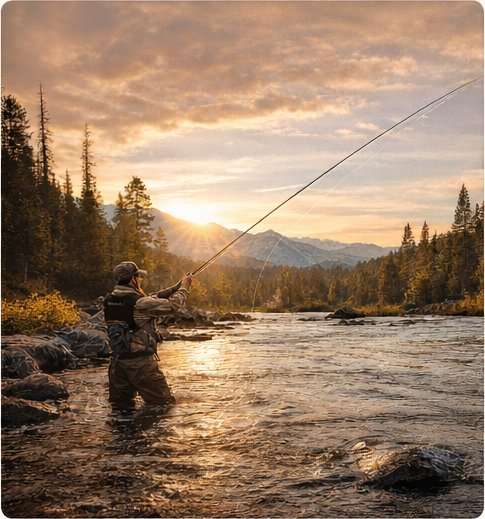
Water & Rivers
Blue-Ribbon Fly Fishing
Montana's Legendary Waters
Montana is home to some of the finest fly fishing on the planet. With over 450 species of fish inhabiting its rivers and streams, the state has earned its reputation as a world-class angling destination. The phrase "blue-ribbon" isn't just marketing, it's a state designation recognizing waters of exceptional quality for wild trout habitat, natural reproduction, and outstanding fishing experiences.
The rivers here aren't stocked with hatchery fish. These are wild, native trout, rainbows, browns, cutthroats, and brook trout, thriving in some of the cleanest water in North America. Whether you're a seasoned angler or picking up a fly rod for the first time, Montana's waters offer something truly magical.
12,000+Miles of Rivers
450+Fish Species
35+Blue-Ribbon Streams
Top Rivers to Fish
Madison River, Flowing 183 miles from Yellowstone National Park to Three Forks, the Madison is perhaps Montana's most iconic trout stream. The fifty-mile stretch between Quake Lake and Ennis Lake is legendary for dry-fly fishing, particularly during the famous Salmon Fly hatch in June. Expect to encounter healthy populations of rainbow and brown trout averaging 14–18 inches, with trophy fish exceeding 20 inches regularly pulled from its riffles and runs.
Yellowstone River, The longest undammed river in the lower 48 states stretches 692 miles through Montana's heartland. The Paradise Valley section between Gardiner and Livingston offers exceptional dry-fly fishing from July through October. The river's cutthroat trout population is one of the most important in the Greater Yellowstone Ecosystem, and landing a native Yellowstone cutthroat here is a bucket-list experience.
Gallatin River, Made famous by the film "A River Runs Through It," the Gallatin carves through a spectacular canyon between Bozeman and Big Sky. It's known for aggressive rainbow trout that readily take dry flies, making it an ideal river for intermediate anglers looking to build confidence. The canyon section offers over 30 miles of productive water with easy roadside access.
Missouri River, Below Holter Dam, the Missouri transforms into one of the most prolific trout factories in the world. The tailwater section averages over 5,000 trout per mile, a staggering number that makes it one of the most densely populated trout streams anywhere. The consistent water temperatures create year-round fishing opportunities, and the river's wide, gentle character makes it perfect for drift boat fishing.
"There is no greater fan of fly fishing than the worm.", Patrick McManus. In Montana, however, the fly is king. The art of matching the hatch here is both science and poetry.
Best Times to Fish
Spring (March–May): As snowmelt begins, early season hatches of Blue-Winged Olives and Midges bring trout to the surface. The Missouri River is particularly productive in spring before runoff affects the freestone rivers.
Summer (June–August): The legendary Salmon Fly hatch in June is the main event, moving up the Madison and other rivers like a traveling feast. July and August bring prolific Pale Morning Dun and Caddis hatches across most rivers. This is prime time for dry-fly enthusiasts.
Fall (September–November): Many anglers consider autumn the finest season. Lower water levels concentrate fish, Brown trout become aggressive as spawning season approaches, and the crowds thin dramatically. The colors of the cottonwood and aspen trees along the riverbanks make fall fishing in Montana a visual feast as well.
Planning Your Trip
A Montana fishing license is required and can be purchased online through Montana Fish, Wildlife & Parks. Non-resident season licenses are available, as are shorter-term options for visitors. Hiring a local guide is highly recommended, especially for first-time visitors, they know the water intimately, provide all equipment, and dramatically increase your chances of a productive day.
Most outfitters offer full-day guided float trips (8–10 hours on the water, lunch included) and half-day wade fishing trips. Expect to pay $500–$700 per day for a guided float for two anglers. Book well in advance for peak season dates, as popular guides fill their calendars months ahead.